DOT inspections for commercial vehicles in Victoria for trucks, trailers, and buses operating under federal compliance requirements
Federal DOT inspection requirements apply on a fixed schedule, and a vehicle that falls out of compliance creates liability for the operator regardless of whether it has had a mechanical failure. Crossroads Tire & Automotive Services performs DOT inspections for commercial trucks, trailers, and buses at the Hwy 59 location, and because the same shop handles tires, brakes, alignments, and preventive maintenance, anything the inspection identifies can be corrected in the same visit rather than requiring a return appointment at a different facility. That consolidation matters when a truck is on a tight dispatch schedule and cannot afford multiple shop stops.
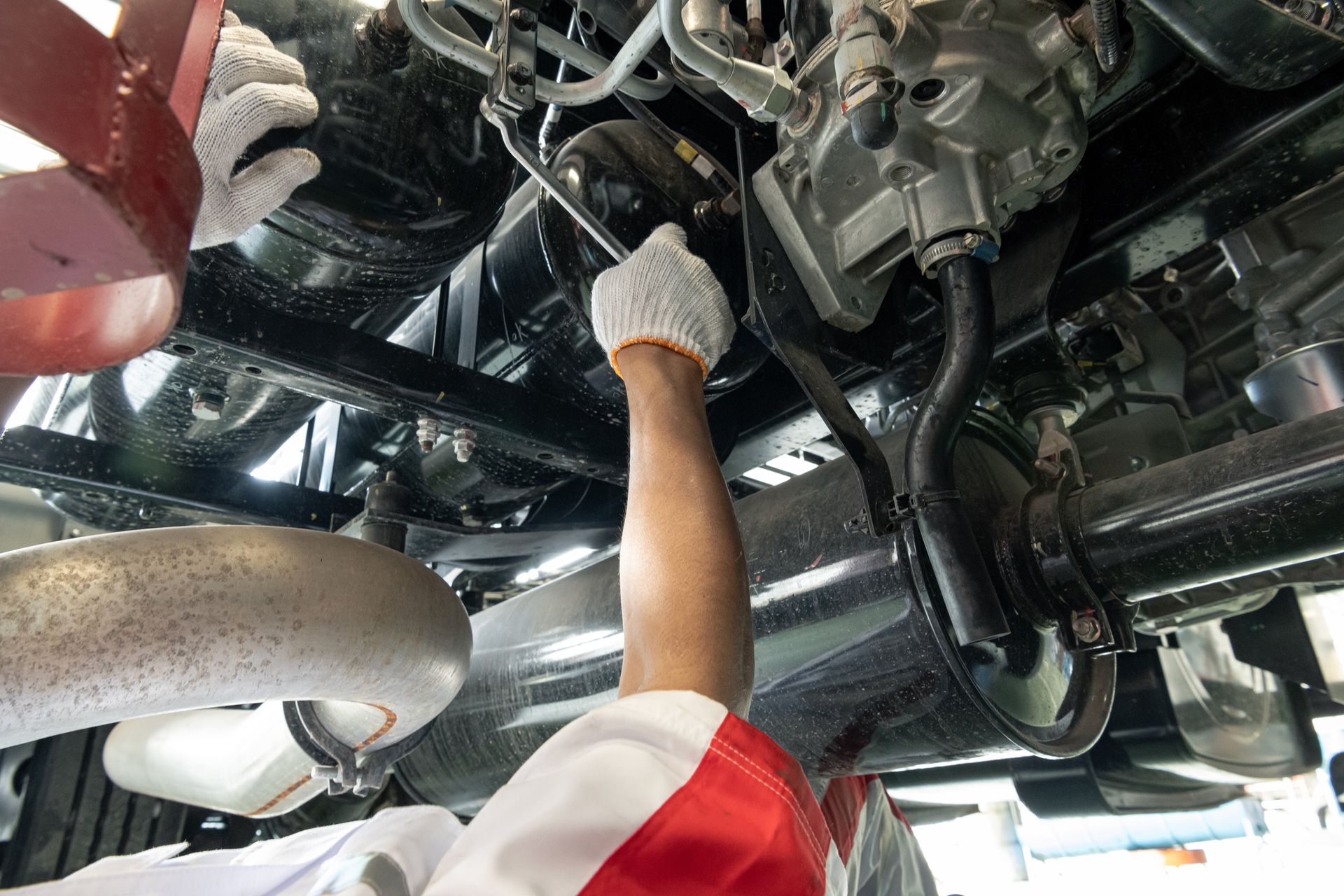
A DOT inspection covers a defined set of systems—brake performance and hardware, tire condition and tread depth, lighting, coupling devices, steering components, and other safety-critical systems depending on the vehicle type. The sequence is methodical: each system is checked against the applicable federal standard, and any finding that places the vehicle out of compliance is documented specifically so the operator knows exactly what needs to be corrected and can demonstrate that correction was made. For fleet operators managing multiple units, Crossroads can schedule block inspections to work through a group of vehicles in sequence rather than handling them one at a time as they come available.
To schedule a DOT inspection for one vehicle or to set up a compliance schedule for your full fleet, call the Hwy 59 shop at (361) 266-1520.
Inspections That Keep Commercial Vehicles Compliant
What a DOT Inspection Actually Covers
The inspection follows the North American Standard Inspection criteria, which organize the check into specific item categories. Brake systems receive particular attention because brake-related violations are among the most common out-of-service findings on commercial vehicles—the inspection includes not just pad or lining thickness but brake adjustment, air system performance, and hardware condition across every axle. Tires are checked for tread depth against the minimums that differ by position: steer tires carry a higher minimum tread depth requirement than drive or trailer tires under federal standards, a distinction that is easy to miss without knowing the position-specific threshold.
When the inspection is complete, the operator receives documentation showing which systems passed, which items were flagged, and what corrective action was taken if repairs were completed during the same visit. That paperwork is the compliance record, and having it organized and current is what protects the fleet during a roadside inspection or audit. Crossroads Tire & Automotive Services maintains service records for fleet accounts, which makes pulling the inspection history for a specific unit straightforward when it is needed.
Fleet operators who schedule regular DOT inspections through Crossroads can coordinate them with other scheduled maintenance—pairing an inspection with an oil change, tire rotation, or brake check at the same interval reduces the number of separate shop visits while ensuring the compliance calendar stays current. The Hwy 59 shop's capacity to handle tires, brakes, and alignments alongside the inspection is what makes that consolidation practical rather than just theoretical.
What to Know Before Scheduling a DOT Inspection
These questions address what the DOT inspection process involves, how findings are handled, and what fleet operators in Victoria should know about keeping their vehicles in compliance.
What systems are covered in a standard commercial vehicle DOT inspection?
The inspection covers brake systems and adjustment, tire condition and tread depth by axle position, lighting and reflectors, steering and suspension components, coupling devices on trailer combinations, and fuel system integrity—each system is checked against the federal out-of-service criteria that determine whether the vehicle can remain in operation.
How does tread depth requirements differ by tire position on a commercial vehicle under DOT standards?
Steer tires require a minimum of 4/32-inch tread depth under federal regulations, while drive and trailer tires must meet a 2/32-inch minimum—a tire that passes on a drive axle would be an out-of-service violation if found on the steer axle, which is why position-specific measurement matters during the inspection.
What happens when an inspection finding requires a repair before the vehicle can be cleared?
If the inspection identifies an out-of-service condition, the vehicle cannot legally operate until that item is corrected—at the Hwy 59 shop, brake, tire, and alignment repairs can be completed during the same visit so the truck leaves with both the completed inspection record and the corrective work documented together.
How should a fleet operator prepare vehicles before bringing them in for a DOT inspection?
Reviewing the previous inspection report for any flagged items that were deferred, confirming that lighting is fully functional, and checking that all required documentation is in the cab reduces the time the inspection takes and avoids findings that could have been addressed in advance.
Why does scheduling DOT inspections for a whole fleet at once benefit the operator?
Block scheduling allows the fleet manager to confirm compliance status across all units at a defined point in time, which simplifies record-keeping and ensures that no single unit falls through the scheduling gap that happens when inspections are managed individually as each truck becomes available.
Crossroads Tire & Automotive Services handles DOT inspections alongside the tire, brake, and alignment services that address what those inspections find. Call (361) 266-1520 to schedule an inspection or to set up a compliance program for your fleet at the Hwy 59 commercial shop.
